











 Secure payments
Standard refund policy
Trade Assurance
Secure payments
Standard refund policy
Trade Assurance
| Brand | Intel |
|---|---|
| Model | 545s Series |
| Capacity | 256 GB |
| Usage Class | Consumer/Client |
| Host Interface | SATA 3.0 6Gb/s |
|---|---|
| Total Interface Bandwidth | 6 Gb/s |
| Form Factor | 2.5 inch 7mm |
|---|
| NAND Flash | 64L 3D TLC |
|---|---|
| Drive Writes Per Day | 0.3 |
| Total Bytes Written | 144 TBW |
| Sequential Read | 550 MB/s |
|---|---|
| Sequential Write | 500 MB/s |
| Random Read IOPS | 75000 |
| Random Write IOPS | 85000 |
| Average Latency | 50 μs |
| Mean Time Between Failures | 1.6 Million Hours |
|---|---|
| Uncorrectable Bit Error Rate | 1.0×10⁻¹⁷ |
| Power Loss Protection | No |
| MPN | SSDSC2KW256G801 |
|---|
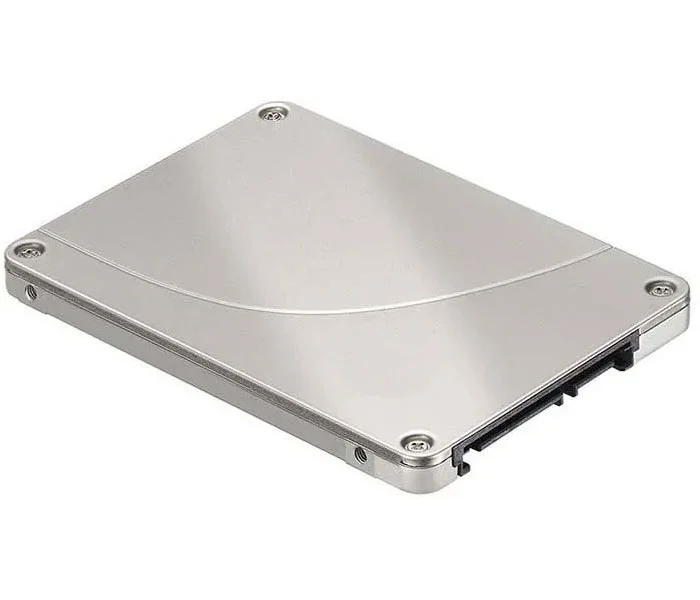
Compared with the predecessor SSDSC2KW256G801, the Intel SSD 545s Series SSDSC2KW256G8 advances to a 64-layer 3D TLC NAND platform, delivering stronger SATA-class responsiveness with up to 550/500 MB/s sequential throughput and 75,000/85,000 IOPS random performance. With 144 TBW endurance at 256 GB, it is a well-balanced choice for client boot drives, VDI endpoints, and read-intensive workstation upgrades where higher density NAND and mature SATA interoperability matter more than NVMe cost.
With an endurance rating of 144 TBW and 0.3 DWPD, the SSDSC2KW256G8 is well suited for typical client and light business workloads such as OS boot, office applications, and general data access. In practical terms, this level of endurance is usually more than sufficient for use as a system drive for many years, including long-term deployment in PCs or thin-client style environments with moderate daily writes. From a reliability perspective, the specified UBER of 1.0E-15 and MTBF of 1.6 million hours indicate a solid level of data integrity and operational stability for standard enterprise procurement requirements. This model does not include power-loss protection, so it is best used in systems with stable power or UPS support, while still providing dependable performance for non-write-critical applications backed by a 1-year warranty.
1. The SATA 3.0 6Gb/s interface, paired with 550 MB/s sequential read performance, enables straightforward drop-in upgrades for legacy enterprise platforms while accelerating boot, imaging, and large file retrieval tasks.
2. With 75,000 IOPS random read capability, this drive sustains responsive performance for virtual desktop pools, metadata-heavy workloads, and frequently queried business databases.
3. Its 50 µs typical latency helps reduce storage wait time, improving application responsiveness in latency-sensitive enterprise environments such as OLTP and real-time analytics.
4. Rated at 0.3 DWPD, the drive is well suited for read-centric enterprise deployments where predictable endurance and lower total cost matter more than heavy daily overwrite demand.
5. Built with 64-layer 3D TLC NAND, it balances density, power efficiency, and cost, making it a practical fit for mainstream enterprise capacity expansion and read-optimized storage tiers.
Lower capacity reference: 128 GB Higher capacity reference: 512 GB Capacity positioning analysis: Within this enterprise SSD family, the 256 GB model sits at the sweet spot. Compared with the 128 GB version, it provides much better room for OS images, logs, updates, and workload growth, reducing the chance of early capacity pressure. Compared with the 512 GB model, it keeps nearly the same enterprise-class sequential and random performance profile while achieving a stronger balance between cost efficiency and usable space. It is best suited for small to mid-sized virtualization clusters, such as hosting boot volumes for about 40 to 60 application or infrastructure VMs.
Q: Is SSDSC2KW256G8 suitable for a write-heavy database server?
A: SSDSC2KW256G8 is not ideal for a write-heavy database server. With 0.3 DWPD, 144 TBW, and 64L 3D TLC NAND, it is better suited for read-intensive or mixed-light workloads.
Q: How many full drive writes per day can it actually endure over its warranty period?
A: This model is rated for 0.3 drive writes per day, meaning about 30% of its 256 GB capacity can be written daily over the warranty period, consistent with its 144 TBW endurance rating.
Q: Does it include power loss protection (PLP) and why is that critical?
A: No, this SSD does not include power loss protection. PLP is critical in enterprise environments because it helps prevent in-flight data loss and metadata corruption during unexpected power interruptions.
Q: What RAID level is recommended for this SSD?
A: For this SSD, RAID 1 or RAID 10 is generally recommended when data protection and performance balance are required. RAID 5 may add extra write overhead, which is less suitable for 0.3 DWPD media.