











 Secure payments
Standard refund policy
Trade Assurance
Secure payments
Standard refund policy
Trade Assurance
| Brand | Samsung |
|---|---|
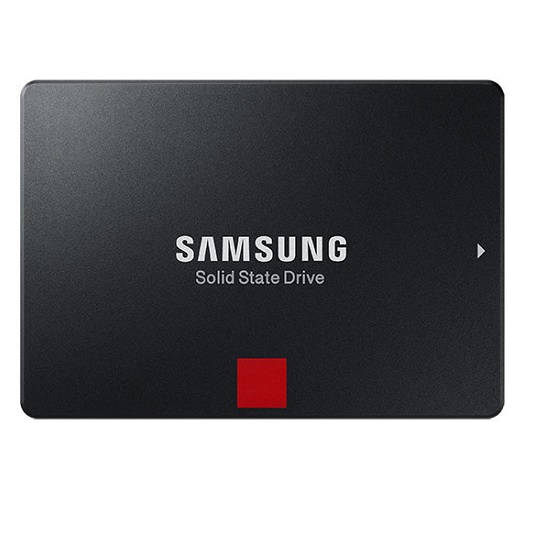
| Model | 860 PRO |
| Capacity | 1 TB |
| Usage Class | Client / Consumer |
| Host Interface | SATA 6.0 Gbps |
|---|---|
| Total Interface Bandwidth | 6 Gb/s |
| Form Factor | 2.5" |
|---|
| NAND Flash | Samsung V-NAND 2-bit MLC |
|---|---|
| Drive Writes Per Day | 0.66 |
| Total Bytes Written | 1200 TBW |
| Sequential Read | 560 MB/s |
|---|---|
| Sequential Write | 530 MB/s |
| Random Read IOPS | 100000 |
| Random Write IOPS | 9000 |
| Average Latency | 45 μs |
| Mean Time Between Failures | 1.5 Million Hours |
|---|---|
| Uncorrectable Bit Error Rate | 1.0×10⁻¹⁷ |
| Power Loss Protection | No |
| MPN | MZQL2960HCJR-00AD3 |
|---|
Compared with MZQL2960HCJR-00AD3, the MZ-76P1T0E 860 PRO is a more practical upgrade for legacy SATA infrastructures, bringing Samsung V-NAND 2-bit MLC and 1200 TBW/0.66 DWPD endurance to environments that do not require NVMe while simplifying platform compatibility. For 1 TB mixed-read/write boot, cache, and workstation scratch workloads, it delivers near-saturation SATA performance at 560/530 MB/s with up to 100,000 IOPS read, giving it a clear durability advantage over typical TLC-based SATA SSDs in the same class.
With an endurance rating of 1200 TBW (0.66 DWPD), this SSD can sustain writing about 660 GB per day over a 5-year service life, which is far above the write volume of most OS, boot, and general business application workloads. In typical enterprise client or light server use, that level of endurance means it can comfortably serve as a system drive for many years without endurance becoming a practical concern. For reliability, the rated UBER of 1.0E-15 and 1.5 million-hour MTBF indicate a strong enterprise-class design with very low probability of unrecoverable read errors under normal operating conditions. This model does not include power loss protection (PLP), so while it is well suited for read-focused and mixed workloads, deployments handling in-flight write-critical transactions should rely on system-level safeguards such as RAID, journaling, capacitive backup, or an uninterruptible power supply.
1. The SATA 6.0 Gbps interface, paired with 560 MB/s sequential read performance, makes this drive a drop-in upgrade for legacy enterprise servers that need faster boot, backup, and bulk data access without changing existing storage infrastructure.
2. With 100,000 K IOPS random read capability, the SSD can sustain highly concurrent database, virtualization, and metadata-heavy workloads while keeping application response times consistent under multi-user pressure.
3. A 0.66 DWPD endurance rating provides the write resilience needed for mixed-use enterprise deployments, balancing longevity and cost for always-on business systems that see steady daily data churn.
4. Samsung V-NAND 2-bit MLC enables stronger write endurance, more stable sustained performance, and better long-term reliability than lower-cost consumer flash, making it well suited for mission-critical storage tiers.
5. The 45 µs typical latency helps reduce storage wait time at the transaction level, improving SLA-sensitive workloads such as OLTP, VDI, and real-time analytics where microseconds directly affect user experience.
Lower capacity reference: 512 GB Higher capacity reference: 2 TB Series reference performance: 512 GB: up to 560 MB/s read, 530 MB/s write, up to 100K/90K random read/write IOPS 1 TB: up to 560 MB/s read, 530 MB/s write, up to 100K/90K random read/write IOPS 2 TB: up to 560 MB/s read, 530 MB/s write, up to 100K/90K random read/write IOPS The 1 TB model sits at the sweet spot in this series. Compared with the 512 GB version, it provides much better headroom for OS images, application data, logs, and future growth, reducing early capacity pressure. Compared with the 2 TB version, it keeps acquisition cost and fleet standardization more controlled while delivering essentially the same mainstream SATA performance profile. This makes 1 TB a well-balanced choice for medium-scale virtualization clusters, such as hosting boot and utility volumes for roughly 40 to 60 general-purpose virtual machines.
Q: Is MZ-76P1T0E suitable for a write-heavy database server?
A: It can support moderate to heavy write workloads thanks to 0.66 DWPD and 1200 TBW, but for mission-critical write-intensive database servers, enterprise SSDs with PLP are usually the safer choice.
Q: How many full drive writes per day can it actually endure over its warranty period?
A: Based on the specified endurance, this model is rated for approximately 0.66 full drive writes per day over its warranty period, which equals about 660 GB of writes daily on a 1 TB drive.
Q: Does it include power loss protection (PLP) and why is that critical?
A: No, this SSD does not include power loss protection. PLP is critical in server environments because it helps prevent in-flight data loss and metadata corruption during unexpected power interruptions.
Q: What RAID level is recommended for this SSD?
A: For most server deployments, RAID 1 or RAID 10 is recommended to balance performance, redundancy, and recovery reliability. RAID 5 may work, but parity writes can increase write amplification.