

 Secure payments
Standard refund policy
Trade Assurance
Secure payments
Standard refund policy
Trade Assurance
| Brand | Samsung |
|---|---|
| Model | 970 EVO Plus |
| Capacity | 1 TB |
| Usage Class | Client / Consumer |
| Host Interface | PCIe 3.0 x4 |
|---|---|
| Total Interface Bandwidth | 8 Gb/s |
| Form Factor | M.2 (2280) |
|---|
| NAND Flash | Samsung V-NAND 3-bit TLC |
|---|---|
| Drive Writes Per Day | 0.33 |
| Total Bytes Written | 600 TBW |
| Sequential Read | 3500 MB/s |
|---|---|
| Sequential Write | 3300 MB/s |
| Random Read IOPS | 600000 |
| Random Write IOPS | 550000 |
| Average Latency | 60 μs |
| Mean Time Between Failures | 1.5 Million Hours |
|---|---|
| Uncorrectable Bit Error Rate | 1.0×10⁻¹⁷ |
| Power Loss Protection | No |
| MPN | MZ-WLO1T90 |
|---|
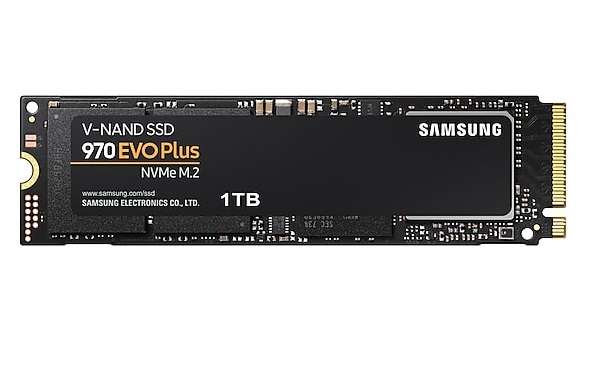
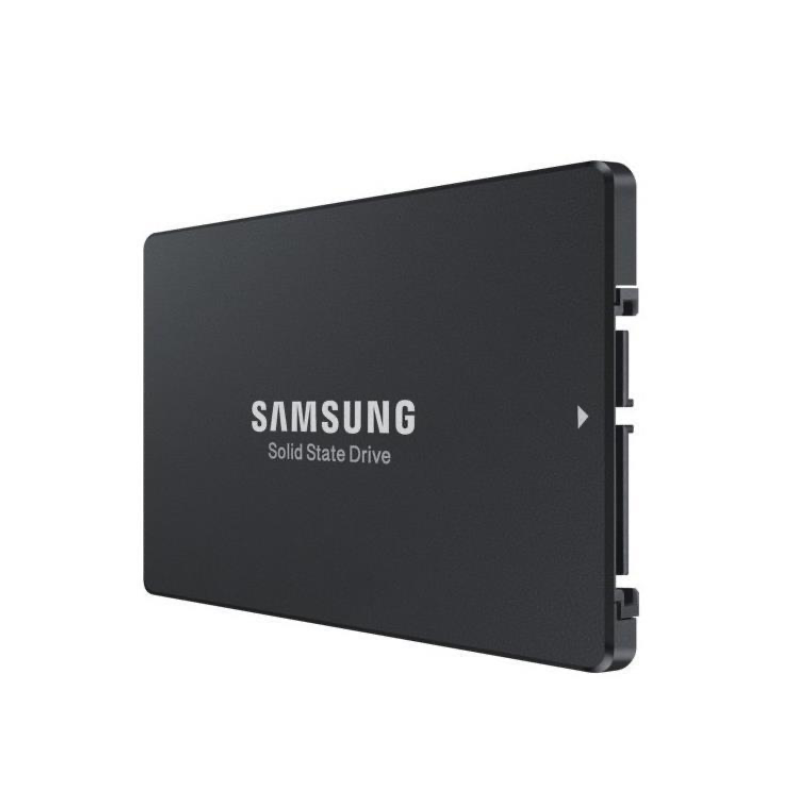
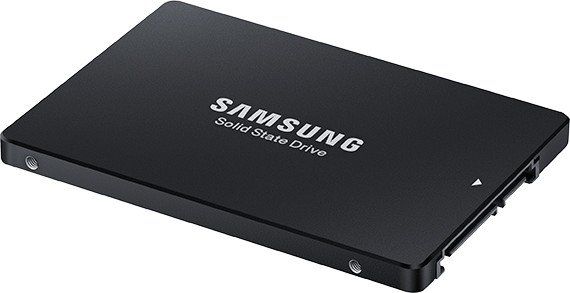
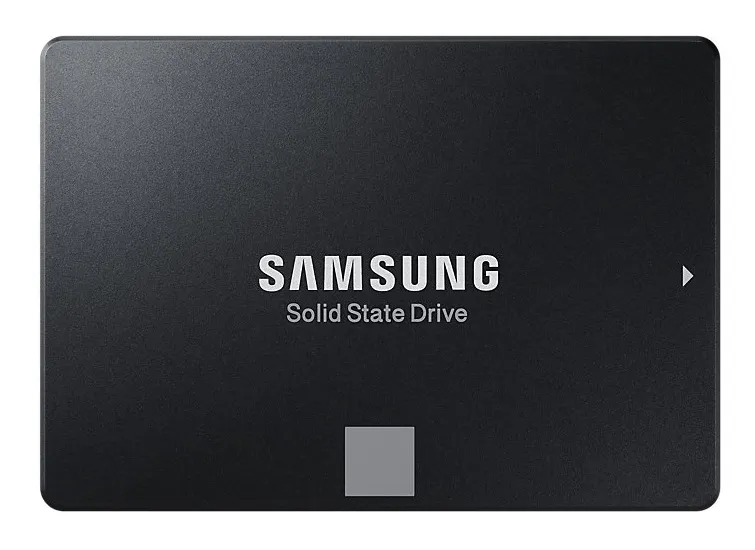
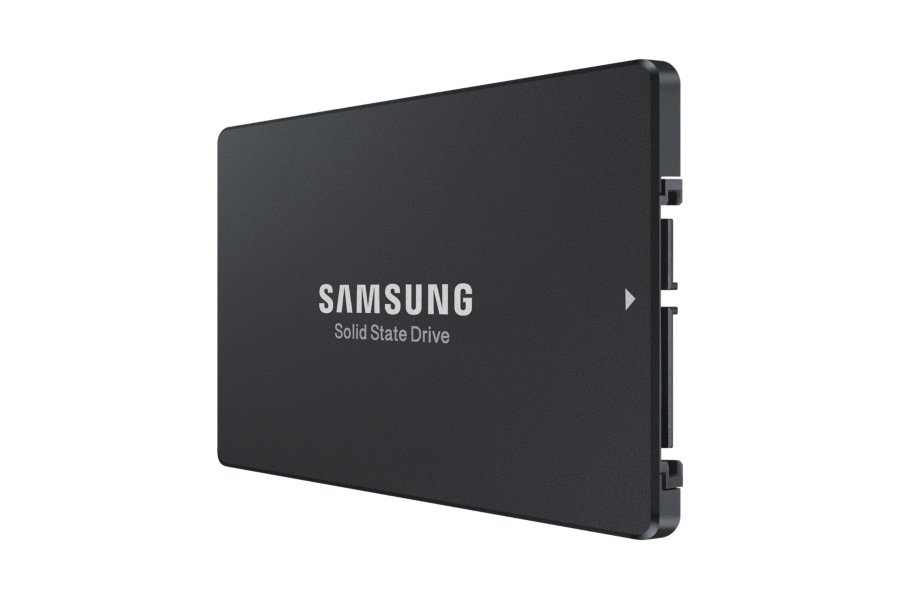
The Samsung 970 EVO Plus 1 TB (MZ-V7S1T0BW) is a strong generational step up from MZ-WLO1T90, combining Samsung V-NAND 3-bit TLC with PCIe 3.0 x4 performance of up to 3,500/3,300 MB/s and 600,000/550,000 IOPS for substantially faster application launches, scratch-disk work, and large asset transfers. Its 600 TBW endurance rating and 0.33 DWPD also give it a more robust write profile for power users than typical client NVMe drives in the same class, making it a better fit for sustained workstation and prosumer workloads.
With an endurance rating of 600 TBW, this 1 TB SSD can sustain about 160 GB of host writes per day for 10 years, which is more than enough for typical OS, office, and general business workstation workloads. In practical terms, when used as a system or application drive under normal daily usage, it offers a very comfortable endurance margin and should not be a concern for long-term deployment. Its UBER rating of 1.0E-15 means the drive is designed to maintain a very low rate of uncorrectable read errors, supporting stable day-to-day data integrity in standard client and commercial environments. The drive does not include power-loss protection (PLP), so while it is a solid choice for PCs and non-transactional workloads, it is best deployed where sudden power failure risk is low or where system-level power backup is available.
1. The PCIe 3.0 x4 NVMe interface, paired with high sequential bandwidth, accelerates boot storms, large dataset scans, and backup restores so servers spend less time waiting on storage.
2. Its strong random-read capability supports dense virtualization, OLTP databases, and metadata-heavy workloads by serving far more small requests in parallel with fewer performance bottlenecks.
3. With a light write-endurance profile, this drive is best aligned with read-centric enterprise roles such as analytics serving, content distribution, and frequently accessed reference data rather than sustained write logging.
4. Samsung V-NAND 3-bit TLC balances cost efficiency, capacity, and stable performance, making it a practical choice for scaling enterprise flash without paying a premium for write-heavy media.
5. The very low typical latency helps applications respond faster to each I/O request, improving user experience and keeping transaction-driven services more predictable under load.
Lower reference capacity: 500 GB Higher reference capacity: 2 TB Approximate same-series performance reference: 500 GB: up to 3,500 MB/s read, 3,200 MB/s write, up to about 480K/550K random read/write IOPS 1 TB: up to 3,500 MB/s read, 3,300 MB/s write, up to about 600K/550K random read/write IOPS 2 TB: up to 3,500 MB/s read, 3,300 MB/s write, up to about 620K/560K random read/write IOPS Capacity positioning analysis: The 1 TB model sits at the sweet spot of the series. Compared with the 500 GB version, it offers much better space headroom for OS images, application stacks, logs, and growth buffers, reducing the need for early capacity expansion. Compared with the 2 TB option, it delivers nearly the same practical throughput and IOPS while keeping acquisition cost and fleet-wide budget under tighter control. It is best suited for mid-scale deployment, such as supporting boot and application storage for around 40 to 60 general-purpose virtualized workloads.
Q: Is MZ-V7S1T0BW suitable for a write-heavy database server?
A: MZ-V7S1T0BW is not ideal for write-heavy database servers. Its 0.33 DWPD, 600 TBW, and TLC NAND are better suited for client, read-focused, or light mixed-workload environments.
Q: How many full drive writes per day can it actually endure over its warranty period?
A: This model is rated at 0.33 DWPD, meaning about one-third of the 1 TB capacity can be written daily over the warranty period, equivalent to roughly 333 GB per day.
Q: Does it include power loss protection (PLP) and why is that critical?
A: No, it does not include power loss protection. PLP is critical in enterprise environments because it helps prevent in-flight data loss and metadata corruption during unexpected power interruptions.
Q: What RAID level is recommended for this SSD?
A: For most business deployments, RAID 1 or RAID 10 is recommended to improve redundancy and maintain performance. RAID 5 may work, but parity writes can increase write amplification and wear.