

 Secure payments
Standard refund policy
Trade Assurance
Secure payments
Standard refund policy
Trade Assurance
| Brand | Samsung |
|---|---|
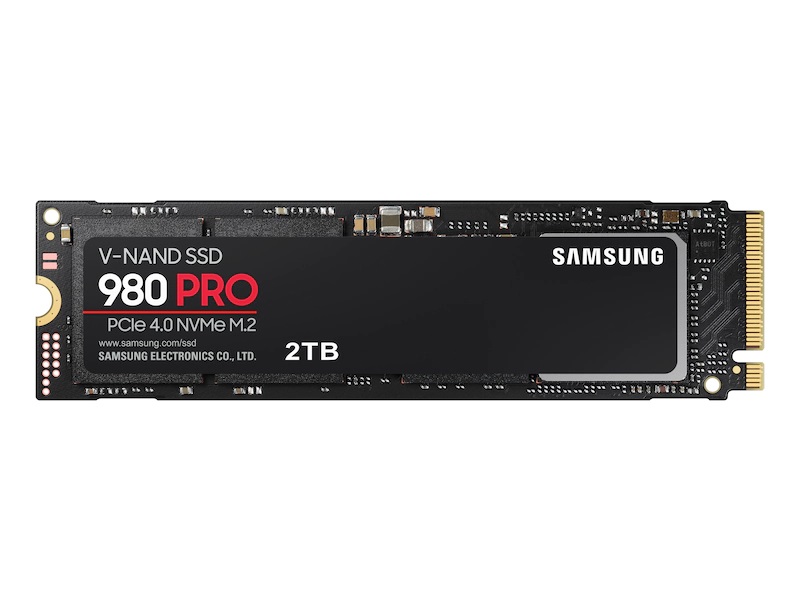
| Model | 980 PRO |
| Capacity | 2 TB |
| Usage Class | Consumer/High-Performance |
| Host Interface | PCIe 4.0 x4, NVMe 1.3c |
|---|---|
| Total Interface Bandwidth | 64 Gb/s |
| Form Factor | M.2 (2280) |
|---|
| NAND Flash | Samsung V6 (128L) TLC |
|---|---|
| Drive Writes Per Day | 0.3 |
| Total Bytes Written | 1200 TBW |
| Sequential Read | 7000 MB/s |
|---|---|
| Sequential Write | 5100 MB/s |
| Random Read IOPS | 1000000 |
| Random Write IOPS | 1000000 |
| Average Latency | 80 μs |
| Mean Time Between Failures | 1.5 Million Hours |
|---|---|
| Uncorrectable Bit Error Rate | 1.0×10⁻¹⁷ |
| Power Loss Protection | No |
| MPN | MZ-V7P2T0BW |
|---|
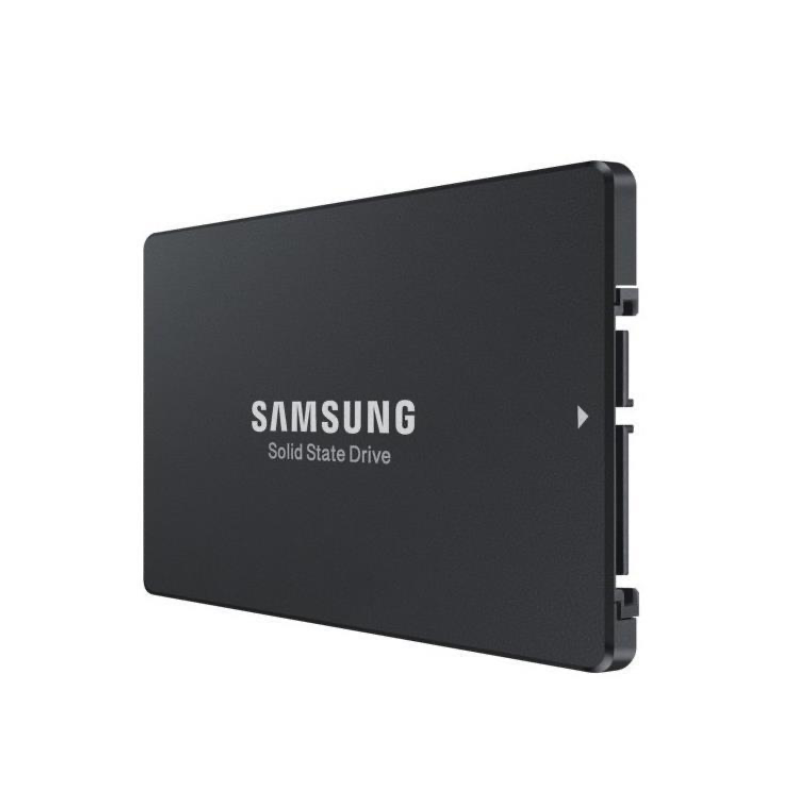
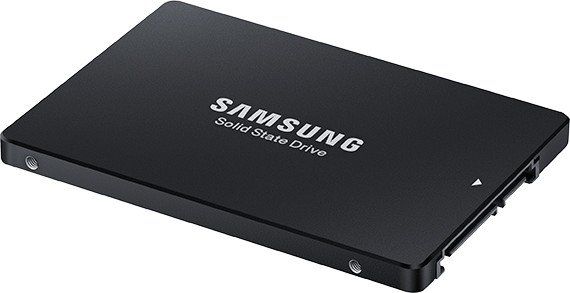
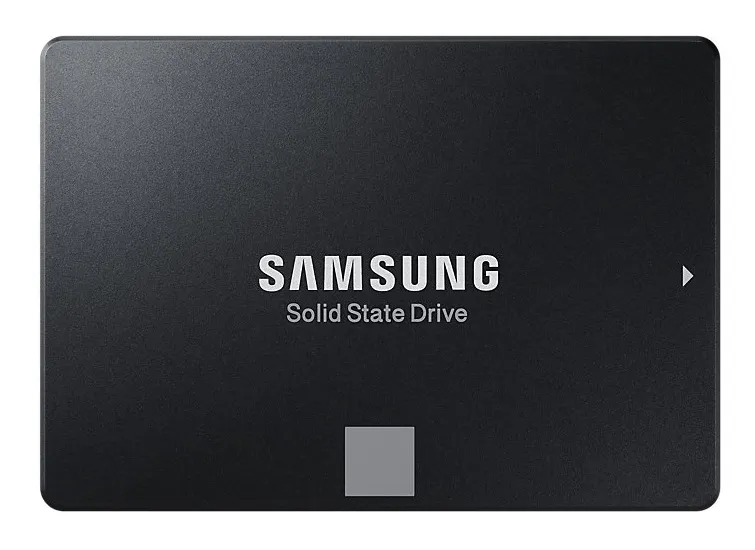
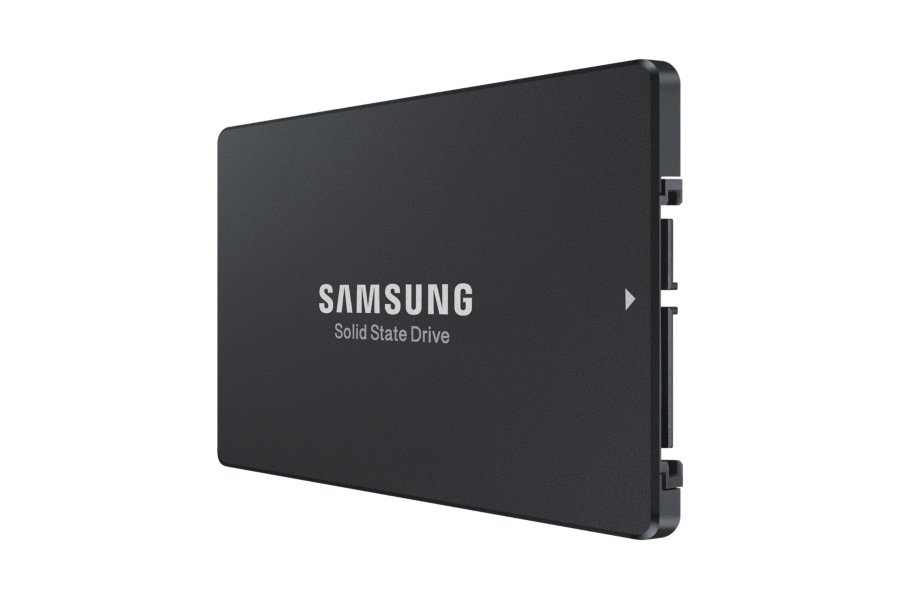
The Samsung 980 PRO 2 TB (MZ-V8P2T0B/AM) is a high-end PCIe 4.0 NVMe SSD that combines Samsung V6 128-layer TLC with 7,000/5,100 MB/s sequential throughput and up to 1,000,000/1,000,000 IOPS, making it especially strong for 4K/8K content creation, code-build scratch space, and heavy workstation gaming loads. Compared with the previous MZ-V7P2T0BW, it delivers a clear generational leap by moving to PCIe 4.0 x4 and substantially increasing both peak bandwidth and random performance, while sustaining solid client endurance at 1,200 TBW.
With an endurance rating of 1,200 TBW and 0.3 DWPD, this SSD can sustain about 328 GB of writes per day for 10 years, which is well above the write volume of a typical OS, application, and general business workstation drive. In practical terms, for normal client or light professional workloads, it can be confidently used as a long-term system drive without endurance being a concern. Its UBER of 1.0E-17 indicates an exceptionally low uncorrectable bit error rate, meaning the drive is designed to deliver very high data integrity during normal operation. This model does not include power loss protection (PLP), so while it is well suited for standard desktop and notebook environments, applications requiring guaranteed in-flight data protection during sudden power interruption should use a PLP-equipped enterprise SSD instead.
1. The Gen4 x4 NVMe architecture provides a high-bandwidth, low-overhead data path that keeps virtualized databases, analytics nodes, and application servers fed without the storage bus becoming a bottleneck.
2. Its top-tier sequential read performance accelerates bulk dataset loading, backup restores, and media or AI pipeline ingestion, reducing wait time for large file movement across enterprise workflows.
3. Its million-class random-read capability is especially valuable for OLTP databases, VDI boot storms, and metadata-heavy workloads that depend on fast access to many small blocks at once.
4. Built on Samsung’s mature high-layer TLC NAND and paired with light write-endurance positioning, it is best suited for read-centric enterprise deployments such as content delivery, reporting replicas, and inference-serving tiers rather than sustained write-heavy logging.
5. The very low typical latency helps improve tail-response consistency, making user-facing services and latency-sensitive applications feel faster under concurrent demand.
Lower capacity reference: 1 TB, MPN MZ-V8P1T0B/AM Typical performance: up to 7,000 MB/s read, 5,000 MB/s write, up to 1,000K/1,000K random read/write IOPS Higher capacity reference: 4 TB, MPN MZ-V8P4T0B/AM Typical performance: up to 7,450 MB/s read, 6,900 MB/s write, up to 1,600K/1,550K random read/write IOPS At 2 TB, the MZ-V8P2T0B/AM sits in the sweet spot of the series. Compared with the 1 TB model, it offers much better capacity headroom for OS images, application stacks, active datasets, and growth without forcing early storage expansion. Compared with the 4 TB model, it delivers a more efficient balance of acquisition cost, usable performance, and deployment density. This makes 2 TB a strong fit for mid-scale virtualization clusters, such as shared boot and application storage for about 40 to 60 general-purpose virtual machines.
Q: Is MZ-V8P2T0B/AM suitable for a write-heavy database server?
A: Not ideal for a write-heavy database server. With 0.3 DWPD, TLC NAND, and no power loss protection, it is better suited for client, read-focused, or mixed-light workloads.
Q: How many full drive writes per day can it actually endure over its warranty period?
A: This model is rated for 0.3 DWPD, meaning about 0.6 TB of writes per day on a 2 TB drive over its warranty period, consistent with the 1200 TBW endurance rating.
Q: Does it include power loss protection (PLP) and why is that critical?
A: No, it does not include PLP. This matters because PLP helps protect in-flight data and metadata during sudden power failure, which is especially important in server and database environments.
Q: What RAID level is recommended for this SSD?
A: For most business use, RAID 1 or RAID 10 is recommended to improve redundancy and availability. Avoid relying on a single drive, especially since this model has no PLP.