

 Secure payments
Standard refund policy
Trade Assurance
Secure payments
Standard refund policy
Trade Assurance
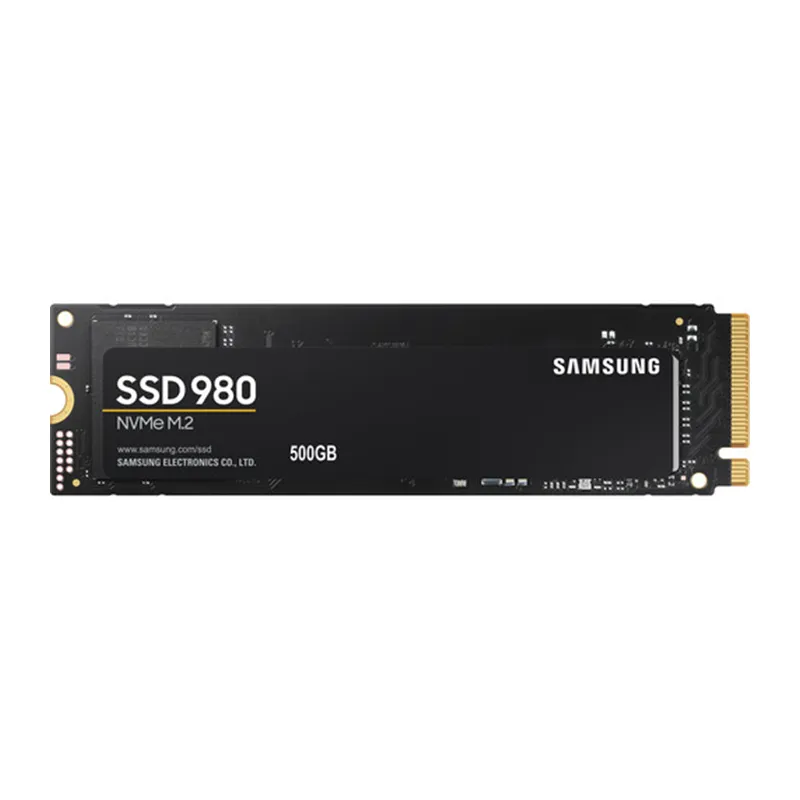
| Brand | Samsung |
|---|---|
| Model | 980 |
| Capacity | 500 GB |
| Usage Class | Client / Consumer |
| Host Interface | PCIe 3.0 x4 |
|---|---|
| Total Interface Bandwidth | 8 Gb/s |
| Form Factor | M.2 (2280) |
|---|
| NAND Flash | Samsung V-NAND 3-bit TLC |
|---|---|
| Drive Writes Per Day | 0.33 |
| Total Bytes Written | 300 TBW |
| Sequential Read | 3100 MB/s |
|---|---|
| Sequential Write | 2600 MB/s |
| Random Read IOPS | 400000 |
| Random Write IOPS | 470000 |
| Average Latency | 60 μs |
| Mean Time Between Failures | 1.5 Million Hours |
|---|---|
| Uncorrectable Bit Error Rate | 1.0×10⁻¹⁷ |
| Power Loss Protection | No |
| MPN | MZ-V8V500B/AM |
|---|
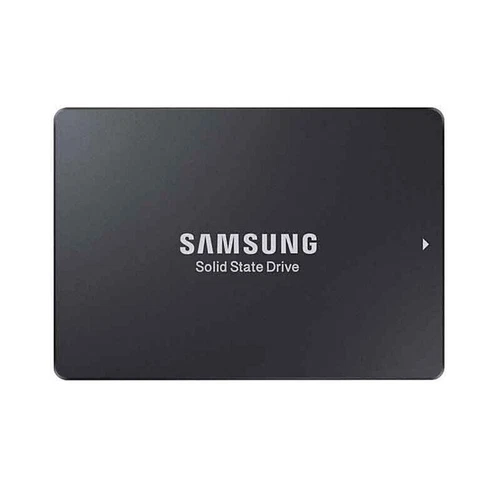
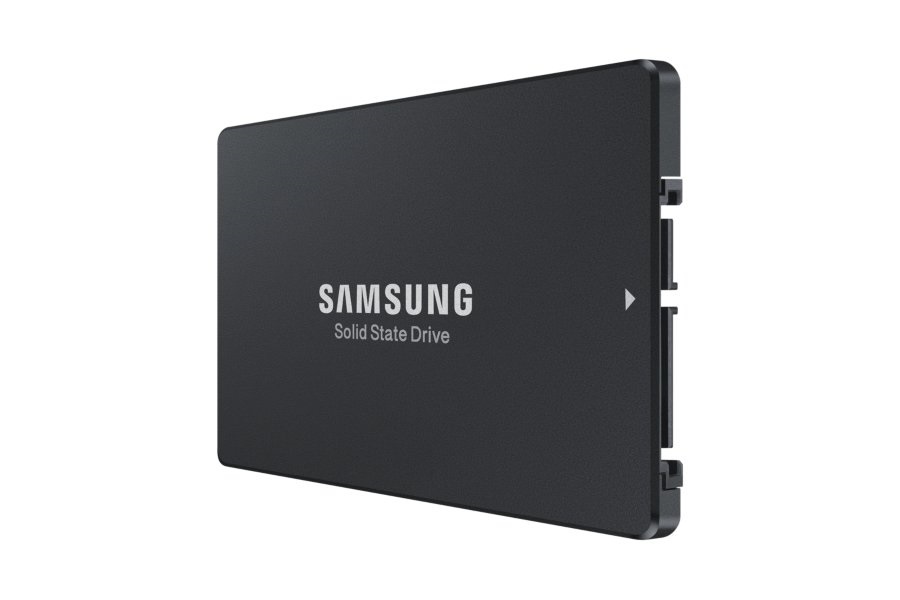
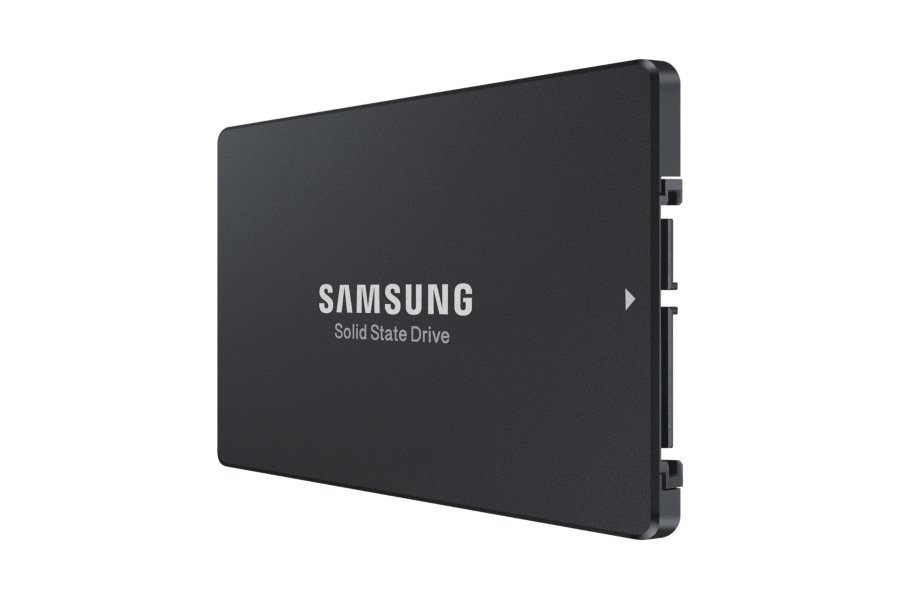
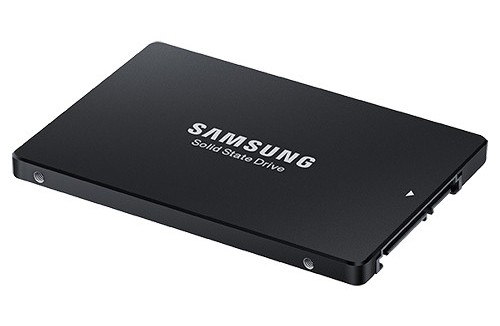
The Samsung 980 500GB (MZ-V8V500BW) is a strong client NVMe choice for boot drives, developer workstations, and mainstream content-creation PCs, combining PCIe 3.0 x4 throughput up to 3,100/2,600 MB/s with 400K/470K IOPS and 300 TBW endurance on proven Samsung 3-bit TLC V-NAND. Compared with MZ-V8V500B/AM, MZ-V8V500BW represents a refreshed deployment variant that preserves the same class-leading performance profile while delivering the same validated Samsung platform in a current MPN for easier lifecycle alignment and qualification.
With a rated endurance of 300 TBW, this 500GB SSD can sustain about 82GB of writes per day for 10 years, or about 164GB per day for 5 years, which is well above the write volume of most office PCs and general-purpose systems. In practical terms, for typical OS, application, and document workloads, it is a comfortable choice as a system drive with long usable life before NAND wear becomes a concern. Its UBER rating of 1.0E-15 means the drive is designed for a very low rate of uncorrectable read errors, which is in line with mainstream client SSD reliability expectations and supports dependable day-to-day operation. The drive does not include power-loss protection (PLP), so while it is suitable for standard desktop and notebook use, it is not intended for environments where sudden power failure protection for in-flight data is a strict requirement.
1. The PCIe 3.0 x4 interface, paired with strong sequential read throughput, enables fast dataset streaming and shorter load times for virtualization, backup, and read-heavy application servers.
2. Its high random-read capability helps databases, VDI pools, and metadata-intensive workloads respond smoothly under heavy parallel access.
3. The endurance profile is best suited to read-centric enterprise deployments, where steady daily traffic matters more than sustained write saturation.
4. Samsung V-NAND 3-bit TLC balances cost, density, and efficiency, making it a practical fit for scale-out storage tiers that need solid performance per dollar.
5. The low typical latency improves QoS consistency, reducing storage wait time for latency-sensitive services such as online transaction processing and real-time query systems.
Lower capacity: 250 GB Higher capacity: 1 TB In the MZ-V8V family, the 500 GB model is the practical sweet spot. Compared with the 250 GB version, it provides much better room for operating systems, patching, logs, and steady workload growth, reducing early capacity pressure. Compared with the 1 TB model, it maintains a more efficient purchase cost while still delivering broadly similar day-to-day sequential and random performance for mainstream deployments. It is best suited for small to mid-sized infrastructure, such as boot and utility storage for around 30 to 50 lightweight virtual application instances.
Q: Is MZ-V8V500BW suitable for a write-heavy database server?
A: No. The MZ-V8V500BW is a client NVMe SSD with 0.33 DWPD, TLC NAND, and no PLP, so it is better suited for desktops, boot drives, or light mixed workloads.
Q: How many full drive writes per day can it actually endure over its warranty period?
A: Based on 300 TBW and 500 GB capacity, it supports about 600 full drive writes total. Assuming a 5-year warranty, that equals roughly 0.33 full drive writes per day.
Q: Does it include power loss protection (PLP) and why is that critical?
A: No, it does not include PLP. This matters because unexpected power loss can leave in-flight writes incomplete, increasing the risk of data corruption or metadata inconsistency in server workloads.
Q: What RAID level is recommended for this SSD?
A: For this SSD, RAID 1 is the safest general recommendation for redundancy. If you need both performance and fault tolerance, RAID 10 is preferable; avoid parity RAID for heavy writes.